
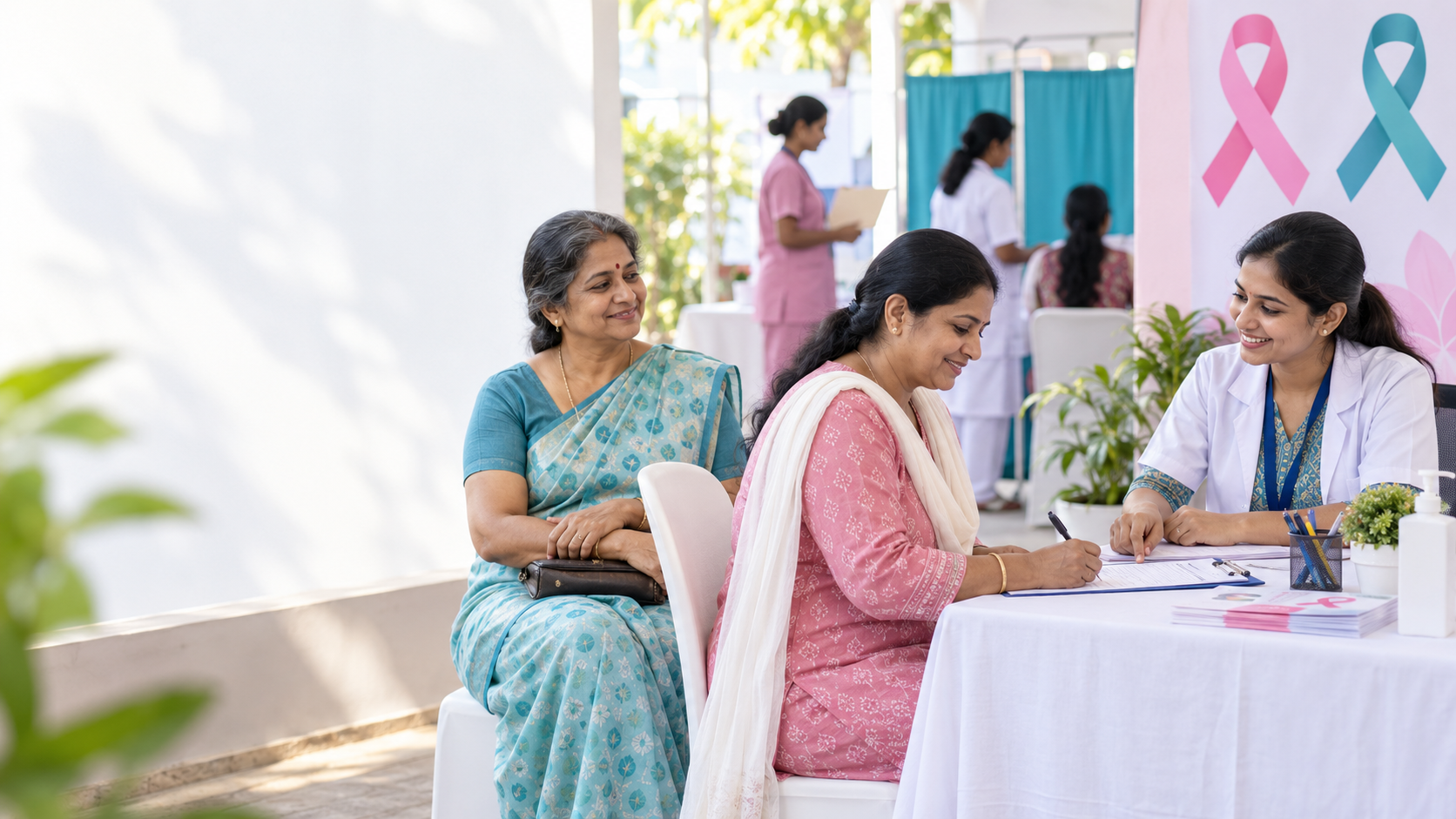
Breast and cervical cancer are two of the most common cancers among women in India — and two of the most treatable when found early. The tragedy is that many women reach a doctor only when the disease is advanced, often because of hesitation, a lack of awareness, or simply not knowing that free screening exists nearby. At Dhanvantari Cancer Foundation, we hold free breast and cervical cancer screening camps across Andhra Pradesh and Telangana for exactly this reason. This guide is written to change one thing: to help you, and the women in your family, get checked in time.
A reassurance to begin with: screening is quick, private and free, and most changes it finds are not cancer. But finding a problem early — or ruling one out — can save years of hardship, and sometimes a life.
Why screening matters so much
Breast and cervical cancer caught early are highly treatable, often with simpler treatment and a far better chance of full recovery. Caught late, both become much harder to treat. The catch is that early-stage disease usually causes no dramatic symptoms — which is exactly why waiting to "feel unwell" is so risky, and why screening, which looks for problems before symptoms appear, is so powerful. The World Health Organization has even set a global goal to eliminate cervical cancer, because it is one of the most preventable cancers of all.
Breast cancer: know your own body
The single most valuable habit is simply being familiar with how your breasts normally look and feel, so that you notice any change. See a doctor if you find:
- a lump or thickening in the breast or underarm;
- a change in the size or shape of the breast;
- dimpling or puckering of the skin;
- a change in the nipple, or in its position;
- or any unusual discharge, especially if it contains blood.
Most such changes are not cancer — but only a doctor can tell you for sure, and early is always better. As women get older, doctors often recommend a clinical breast examination, and in some cases a mammogram; ask your doctor what is right for you and when. For more on the wider signs of cancer, the World Health Organization offers clear, reliable information.
Cervical cancer: one of the most preventable
Cervical cancer is unusual in a hopeful way: it can often be prevented and caught very early through screening. Warning signs to act on include bleeding between periods, after intercourse or after menopause, unusual discharge, or persistent pelvic pain. But screening is more powerful still, because tests can detect changes in the cervix before they ever become cancer — allowing simple, early treatment. Ask your doctor about cervical screening, which is generally recommended periodically for women from their thirties onwards.
The HPV vaccine — protection before exposure
Most cervical cancer is linked to HPV, a common virus. The HPV vaccine protects against the types that cause most cervical cancers, and works best when given to girls before they are exposed to the virus — typically in the early teenage years, though older girls and young women may also benefit. If you have a daughter, ask a doctor whether the vaccine is right for her. Vaccination and regular screening together offer the strongest protection.
Simple steps that lower your risk
Screening finds cancer early; a few everyday habits can also lower the chance of it developing in the first place. Avoiding tobacco in every form, staying physically active, keeping to a healthy weight, limiting alcohol, and eating plenty of fruit and vegetables all help protect against many cancers. For cervical cancer specifically, the HPV vaccine and regular screening are the two strongest safeguards. None of this is a guarantee — which is exactly why screening still matters — but small, steady choices genuinely tilt the odds in your favour, for you and for the daughters who learn these habits from you.
Why women delay — and why they shouldn't
Fear, shyness, family responsibilities, cost worries, and the belief that "I feel fine, so I must be fine" all keep women from getting checked. Yet early-stage disease usually has no symptoms at all — feeling fine is not proof of health. Women so often put everyone else first; screening is one small act of putting yourself first that protects your whole family, because they depend on your health too. It takes only a few minutes.
A word for husbands, sons and the whole family
Screening a woman's cancer is a family matter, not only a women's matter. In many households women put their own health last, and a gentle nudge — with a little practical help — from those around them makes all the difference. If you are a husband, son, brother or friend, you can help by encouraging the women in your life to get screened, offering to accompany them, taking on the chores or childcare for an afternoon, and treating the subject as normal and important rather than something to be embarrassed about. Your support may be the very reason someone gets checked in time.
What screening involves
Screening is far simpler than most women expect. A breast check involves a trained health worker or doctor examining the breasts and underarms, with guidance on noticing changes yourself. Cervical screening involves a quick, gentle test carried out privately by a female health worker or doctor wherever possible. Both are done with care and respect for your privacy, take only a few minutes, and at our camps are completely free. If anything needs a closer look, our team guides you to the right hospital and, where needed, helps you access free treatment and financial aid.
Free screening camps at Dhanvantari
We hold free breast and cervical cancer screening camps regularly across Hyderabad, Warangal, Nizamabad, Vijayawada, Visakhapatnam and Guntur. Here is what to expect:
- It's free and confidential. No charge, and your privacy is respected throughout.
- Female staff wherever possible. So you feel comfortable and at ease.
- Quick and simple. The check takes only a few minutes.
- Clear next steps. If anything needs follow-up, we guide you all the way.
You do not need to be unwell to attend — screening is most valuable precisely when you feel well. And please, bring the women you love: your mother, sister, wife, daughter or neighbour. One conversation, and one afternoon, can save a life.
How to register
Registering takes a minute. Visit our awareness and screening page to book a slot, or call or WhatsApp +91 82470 94634 (Monday to Saturday, 8 AM to 8 PM). Tell us your city and we will point you to the nearest upcoming camp. You can also learn more about our work or the wider support we offer patients and families.
Related reading from our blog: the 10 early warning signs of cancer, and our guide to free cancer treatment through Aarogyasri and PM-JAY if you or a loved one ever needs it.
Book your free screening today
Early detection is the best protection a woman has against breast and cervical cancer — and it is free and close to home. Register for a free screening camp or call +91 82470 94634 today, and bring the women in your family with you. If you would like to help us reach more women with free screening, please consider a donation — it funds camps in the communities that need them most.
This article is for awareness only and is not a substitute for professional medical advice. If you are worried about any symptom, please consult a qualified doctor.