
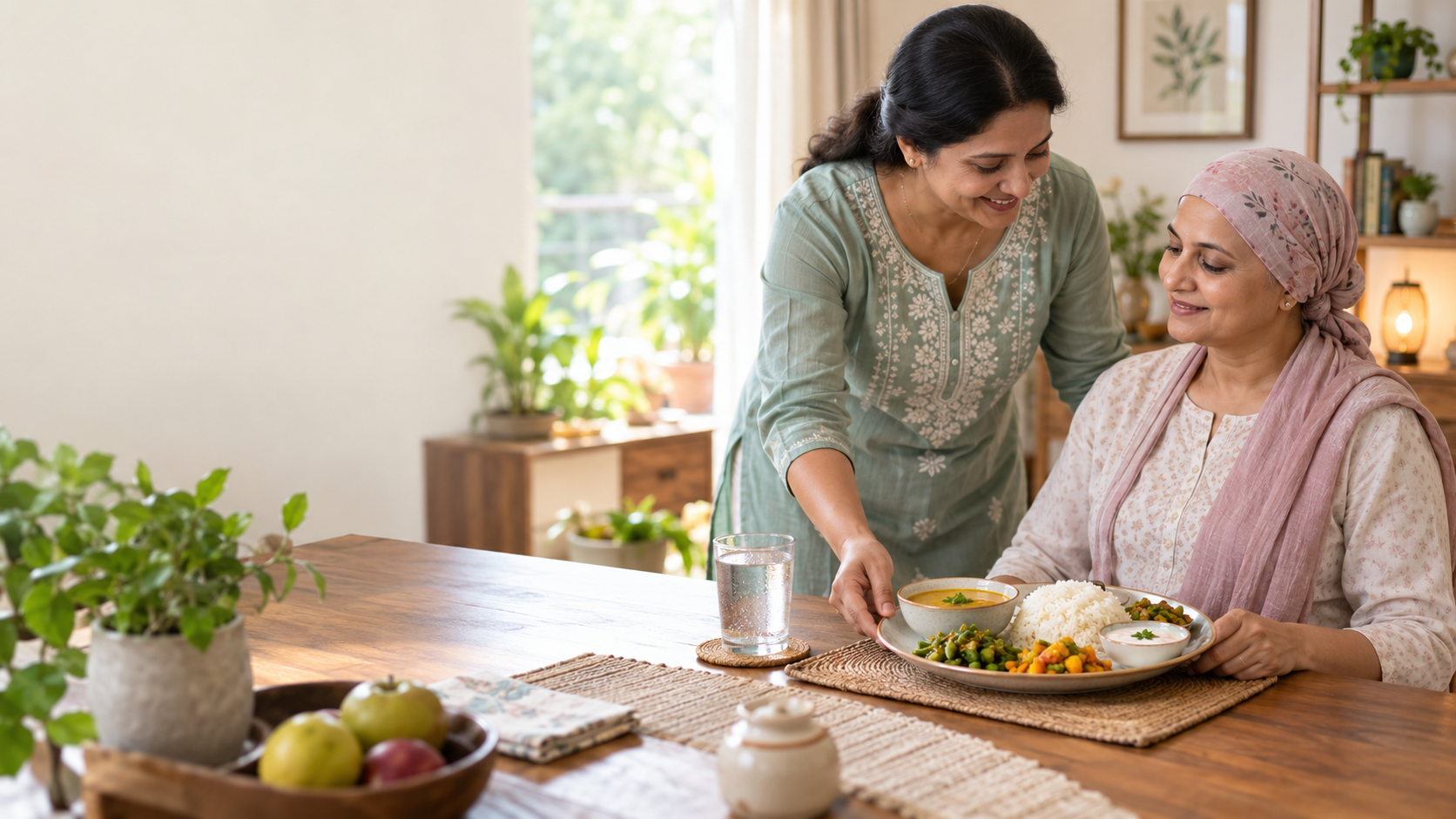
Cancer treatment asks a great deal of the body. Surgery, chemotherapy and radiation all take their toll, and the food a patient eats becomes part of the treatment — it helps them withstand each cycle, repair healthy tissue, keep their strength up, and recover faster. Yet treatment often brings nausea, mouth sores and a loss of appetite that make eating a daily struggle. At Dhanvantari Cancer Foundation, our nutritionists help families across Andhra Pradesh and Telangana turn everyday meals into real support for their loved one — free of charge. This guide shares the practical advice we give most often.
A note before we start: every patient is different. Treatment type, other health conditions and appetite all change what a person needs, so treat this as general guidance and ask your oncologist or our nutritionists for a plan suited to you.
Why good nutrition matters during treatment
Well-nourished patients tend to tolerate treatment better, face fewer interruptions, and recover more quickly. Weight loss and muscle loss are common during treatment and can leave a patient weak and more prone to infection. Eating well will not cure cancer, but it gives the body the raw materials to cope with the treatment that can — and it lifts energy and mood at a time when both are under strain.
The three simple goals: protein, energy and fluids
You do not need an elaborate diet. Most of what helps comes down to three goals.
Protein rebuilds tissue and maintains muscle. Familiar protein-rich foods — dal and other pulses, eggs, curd, paneer, milk, chicken and fish — should feature in most meals. Energy keeps weight stable; when appetite is low, small, frequent meals every two to three hours are easier to manage than three large ones, and adding ghee, nuts or a little oil boosts calories without bulk. Fluids prevent the dehydration treatment can cause, so keep the patient sipping water, buttermilk, coconut water, soups and diluted juices through the day.
Everyday foods that help — from your own kitchen
The best food during treatment is usually the familiar, home-cooked kind: gentle on the stomach and easy to love. Dishes our nutritionists often suggest include:
- Dal-rice, curd-rice and khichdi — soft, soothing and easy to digest.
- Idli, dosa, upma and pongal — light, warm and simple to eat.
- Ragi porridge (java) with milk — nourishing and calorie-rich.
- Eggs, paneer and well-cooked chicken or fish — for protein.
- Bananas, stewed apple and other soft fruits — for energy and gentle fibre.
- Buttermilk, coconut water and clear soups — for fluids and comfort.
There is no single "cancer food." A varied plate built around these everyday items does more than any expensive superfood.
Eating through the side effects
Most eating problems during treatment can be eased with small changes. Here is what tends to help.
Nausea
Offer bland, dry foods such as toast, idli, khichdi, plain rice or bananas. Cold or room-temperature food smells less strong and is often easier to keep down than hot, spicy dishes. Small sips of ginger tea, nimbu pani or plain water between meals can settle the stomach. Eating slowly and resting upright afterwards also helps.
Mouth sores and a sore throat
Choose soft, moist foods — dal-rice, curd-rice, porridge, mashed vegetables, soups and smoothies. Avoid spicy, sour, salty, very hot or crunchy foods that sting. A straw can make drinking easier, and lukewarm rather than hot food is kinder to a sore mouth.
Changes in taste
Many patients say food tastes metallic or bland. Marinating with mild spices, adding a squeeze of lemon (if there are no mouth sores), serving food cool, and using wooden or plastic spoons instead of metal can all help. If red meat tastes odd, switch to eggs, dairy or pulses for protein.
Low appetite
When appetite fades, do not wait for hunger. Offer small portions often, keep favourite foods within reach, and make each mouthful count with energy- and protein-rich options. A short walk before a meal can gently stir the appetite.
Constipation or diarrhoea
Both are common. For constipation, more fluids, fruit and gentle fibre help; for diarrhoea, simple low-fibre foods like rice, curd and banana with plenty of fluids are easier on the gut. Tell your care team if either is severe or persistent.
Food safety matters more during chemotherapy
Chemotherapy can weaken the immune system, so hygiene is not optional. Serve freshly cooked, hot food; wash fruits and vegetables thoroughly; and peel fruit where you can. Avoid raw or undercooked meat, fish and eggs, unpasteurised milk, cut fruit or juices left standing, and street food during treatment. Reheat leftovers well, and do not keep cooked food at room temperature for long. These simple habits prevent infections that could delay treatment.
Be wary of fad diets and "miracle" cures
Families under stress are often urged to try special cancer diets, cut out whole food groups, or buy costly supplements. Be careful. No single food or diet cures cancer, and cutting out food groups can leave a patient weak just when strength matters most. Some supplements can even interfere with treatment. Before starting any supplement or restrictive diet, check with your oncologist or our nutritionists. Trusted sources such as the National Cancer Institute are a safer starting point than social-media claims.
A gentle word for caregivers
Feeding someone through treatment can be emotionally hard — a patient who cannot eat, or who pushes food away, can leave a caregiver feeling helpless or anxious. Please be kind to yourself. On difficult days, a few sips of a nourishing drink or a couple of spoonfuls of curd-rice are a genuine win; the goal is steady nourishment across the week, not a perfect plate at every meal. Try not to turn mealtimes into a battle — offer, encourage gently, and let go of guilt on the hard days. If your loved one eats very little for several days, tell the care team or call us, and we will help.
How Dhanvantari's free nutrition service works
Every patient's needs change as treatment progresses, so a one-size plan rarely fits. Our certified nutritionists build a personalised diet plan around your loved one's treatment, other health conditions, tastes and budget — using affordable, locally available foods, and explained in Telugu, Hindi or English. We adjust the plan as side effects come and go, and we are on hand when a new problem appears. It is part of our wider patient support services, and you can learn more about our work. Like everything we do, it is completely free.
If treatment costs are also a worry, our team can help you access government schemes and financial aid at the same time, so nutrition and treatment are never a trade-off.
Related reading from our blog: our step-by-step guide to free cancer treatment through Aarogyasri and PM-JAY, and the 10 early warning signs of cancer. And if a family member is due a check-up, our free screening camps are open across the region.
Get a free, personalised diet plan today
Good nutrition is one of the most practical ways to help someone you love through cancer treatment — and you do not have to work it out alone. Ask us for a free diet plan, or call or WhatsApp +91 82470 94634 (Monday to Saturday, 8 AM to 8 PM), and our nutritionists will build one around your family's kitchen. You can also contact our team with any question. If you would like to help other families receive this care, please consider a donation — it keeps our nutrition service free for those who need it.
This article offers general information only and is not a substitute for personalised medical or dietary advice. Please consult your oncologist or a qualified nutritionist for guidance specific to the patient.