
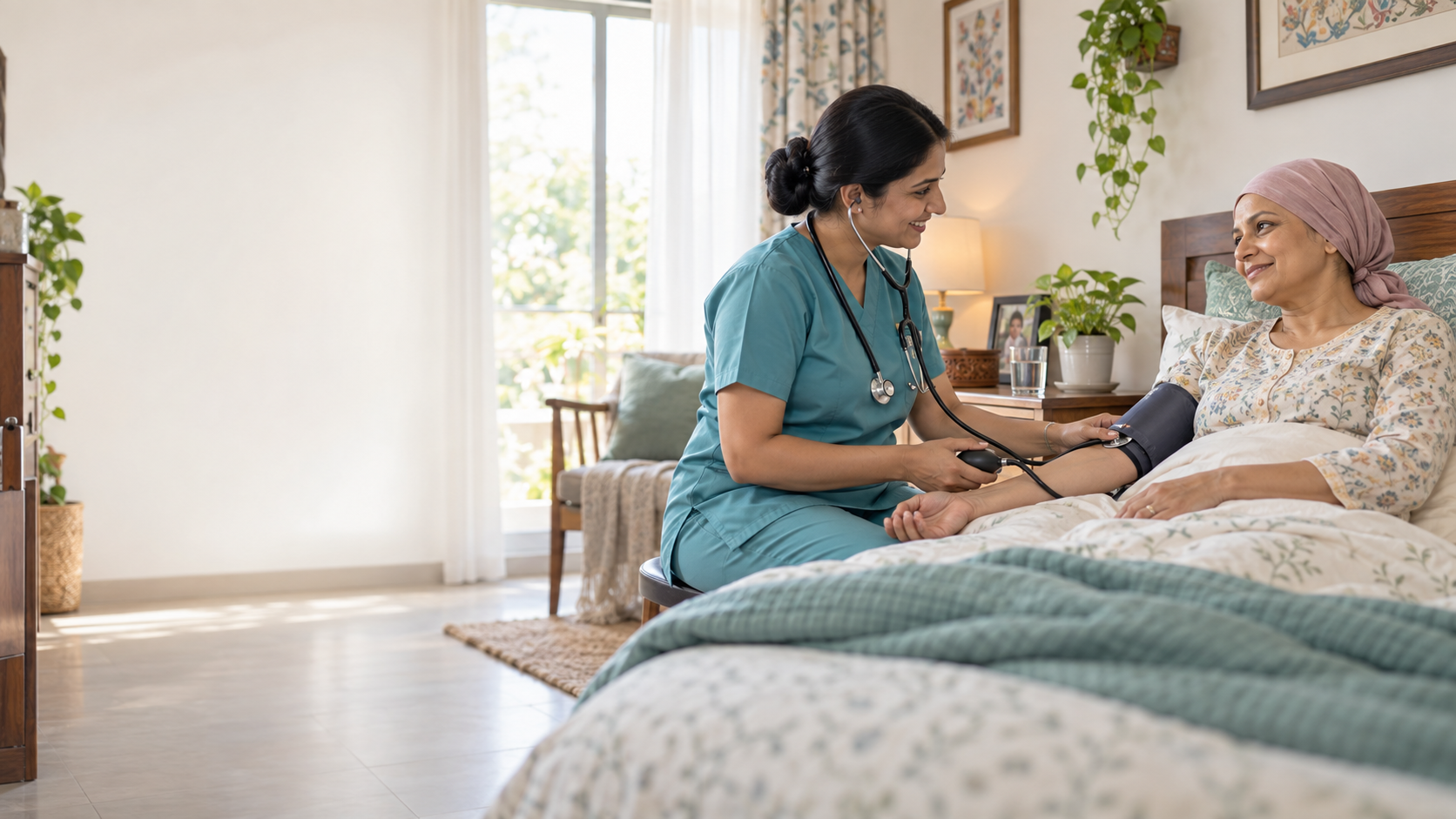
Few phrases in cancer care are as misunderstood as "palliative care." Many families hear it and assume the worst — that treatment has failed, or the end is near. It does not mean that. Palliative care is specialised support that focuses on comfort: easing pain and other symptoms so a patient can live as fully and comfortably as possible, at any stage of illness. At Dhanvantari Cancer Foundation, our home and palliative care team brings that comfort to patients' doorsteps across Andhra Pradesh and Telangana — free of charge, with dignity at its heart. This guide explains what palliative care really is, and how home care can transform a difficult time.
What is palliative care?
Palliative care is care aimed at quality of life. Rather than focusing only on the disease, it treats the whole person — controlling pain, easing symptoms such as breathlessness, nausea or fatigue, and supporting emotional and spiritual needs. It can begin at diagnosis and run alongside active treatment like chemotherapy or radiation, helping a patient tolerate that treatment better. It is not reserved for the final days; many patients receive palliative care for months or years while living active lives.
Palliative care is not "giving up"
This is the myth most worth dispelling. Choosing comfort is not surrender; it is choosing to live as well as possible for as long as possible. Palliative care can be given at the same time as treatment intended to cure or control the cancer. Even when a cure is no longer the goal, good palliative care allows patients to spend their time with less pain, more energy and greater peace — surrounded by the people and the place they love. The World Health Organization recognises palliative care as an essential part of cancer care, not an alternative to it.
When should palliative care start?
Earlier is better. Because palliative care is about comfort and quality of life, there is no need to wait until treatment options run out. Introduced early — even at diagnosis — it can ease symptoms, reduce distress, and help patients stay stronger through active treatment. If you think your loved one could be more comfortable, ask the oncologist for a palliative-care referral, or simply call us; you do not need anyone's permission to seek comfort.
What palliative care includes
Good palliative care works on several fronts at once:
- Pain and symptom control — keeping pain, breathlessness, nausea and other symptoms as low as possible.
- Emotional and spiritual support — for the fear, sadness and questions that serious illness brings.
- Practical help — guidance on day-to-day care, nutrition, and keeping the patient comfortable.
- Family support — helping caregivers cope and, where needed, supporting families through the hardest times.
Why home care changes everything
For many patients, home is where they most want to be — surrounded by family, familiar food, their own bed and the rhythms of ordinary life. Home palliative care brings trained support to the doorstep, which spares frail patients exhausting and often painful hospital trips. It lets families care for their loved one in a place of comfort and dignity, with professional help never far away. For a patient who is weak or in pain, the difference between a hospital ward and their own home can be immense. Being at home can also make it easier for children and grandchildren to visit, keeping the whole family close.
Managing pain — no one should suffer in silence
One of the greatest fears families carry is that a loved one will be left in pain. It is a fear worth naming, because pain can almost always be eased. Under medical supervision, modern approaches can control even significant pain safely, and symptoms like breathlessness or nausea can be managed too. Families sometimes hesitate to report pain — fearing nothing can be done, or worrying about strong medicines — but please do raise it. Effective pain relief is a basic part of good care, not a last resort, and our team will guide you on using it safely and calmly.
Caring for the caregivers
Palliative care extends to the whole family. Looking after a seriously ill loved one at home is physically and emotionally demanding, and caregivers often neglect their own health in the process. Our team offers practical guidance — how to help with daily care, comfort and medicines — as well as emotional support for what is often the hardest period a family goes through. Sharing the load, accepting help, and taking short breaks are not luxuries; they are what make it possible to keep caring. If the strain becomes too much, please tell us — support is there for you too. You may also find our guidance on emotional support for patients and caregivers helpful.
Dignity is at the centre
Above all, palliative care is about dignity — treating the patient as a whole person, not a diagnosis. That means respecting their wishes and routines, keeping them clean, comfortable and free of avoidable pain, and making room for the things that matter to them: family around the bed, a favourite prayer, a familiar meal, a little time in the sun. For patients in their final months, this care helps ensure that time is spent in comfort and peace — something families tell us they remain grateful for long afterwards.
Gentle, honest conversations
Families often avoid talking about a serious illness for fear of upsetting the patient, yet gentle honesty usually brings relief rather than harm. Talking about what a loved one wants — where they would like to be cared for, and what matters most to them — allows the family to honour those wishes. Our counsellors can help start these conversations when they feel too hard to begin alone.
How Dhanvantari's home & palliative care works
Our home and palliative care is designed to bring comfort and dignity within reach of every family, whatever their means. It includes:
- Trained nurses who visit at home to check on the patient and support day-to-day care.
- Medicines delivered to the home, so families are spared repeated trips.
- Pain-management guidance, so no one endures avoidable discomfort.
- Emotional and practical support for patients and caregivers, in Telugu, Hindi or English.
What a home visit looks like
On a typical visit, a trained nurse checks the patient's comfort and symptoms, reviews the medicines and how they are working, helps with general care where needed, and answers the family's questions. The visit is unhurried and gentle, and the team leaves clear guidance on what to watch for and whom to call between visits.
This service is part of our wider patient support services, and you can read more about our work. Like everything we do, it is free. If treatment or medicine costs are a worry, our team can also help you access government schemes and financial aid.
For trusted national information and a helpline, families can also turn to Pallium India, a respected palliative-care organisation. And for related reading, see our guides to free cancer treatment through Aarogyasri and PM-JAY and diet during cancer treatment.
Comfort and dignity should never be out of reach
If a loved one is finding hospital visits difficult, is in pain, or would simply be more comfortable at home, we can help. Request home care, or call or WhatsApp +91 82470 94634 (Monday to Saturday, 8 AM to 8 PM); you can also contact our team. If you would like to help other families receive this care, please consider a donation — it brings comfort and dignity to patients who need it most.
This article offers general information only and is not a substitute for professional medical advice. Please consult your doctor or palliative-care team for guidance specific to the patient.